How to Read a Tire Sidewall for Beginners
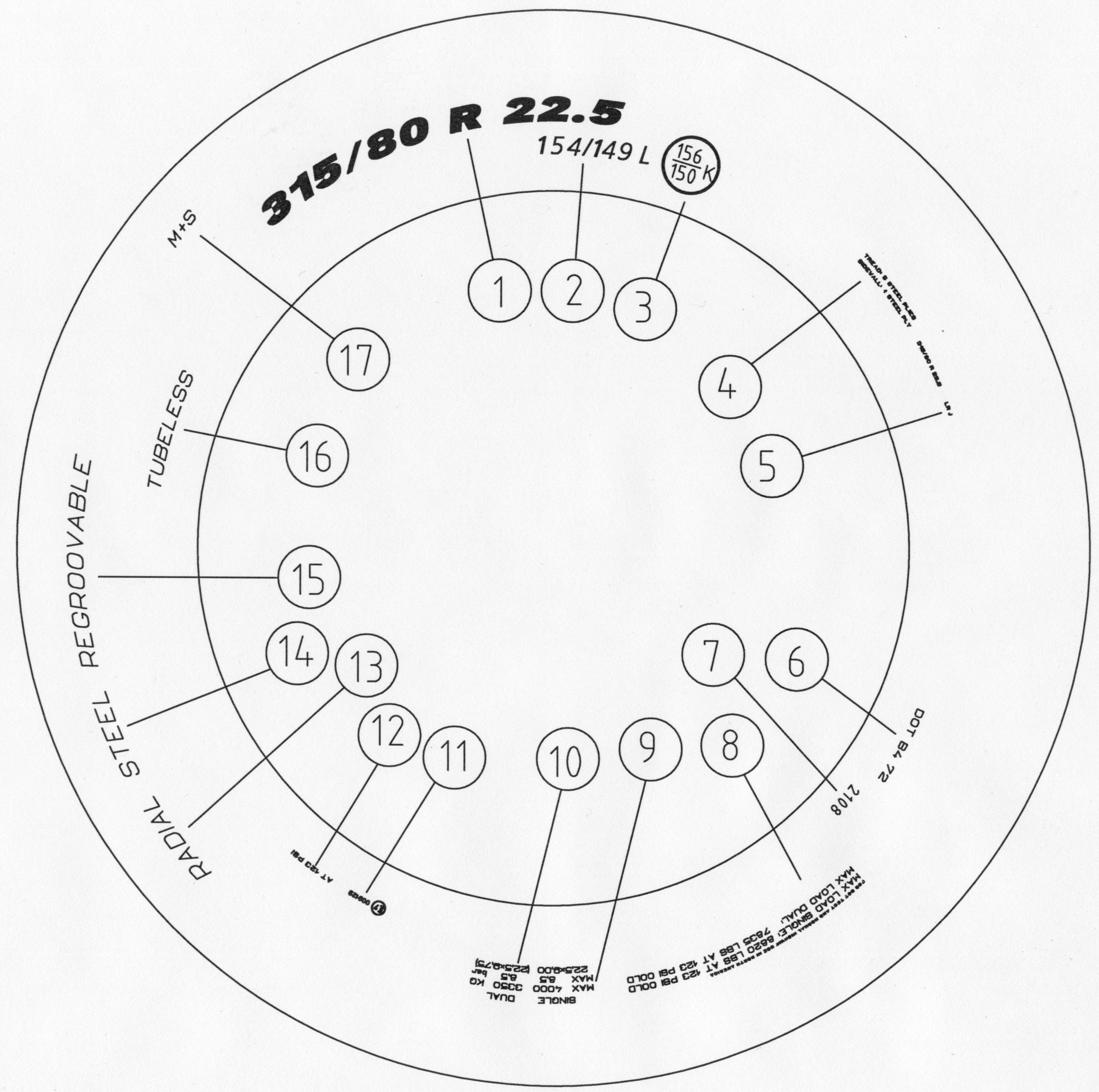
A tire sidewall can look like a wall of random letters, numbers, warnings, and brand names. For a beginner, the most confusing part is knowing which markings matter for normal ownership and which ones are manufacturing or design details you rarely need to use.
Learning how to read a tire sidewall for beginners helps you check tire size, understand replacement basics, compare load and speed ratings, and find the tire age code. You do not need to memorize every stamp on the rubber. You need a calm way to find the markings that affect fit, safety, and maintenance.
Start with the main tire size code
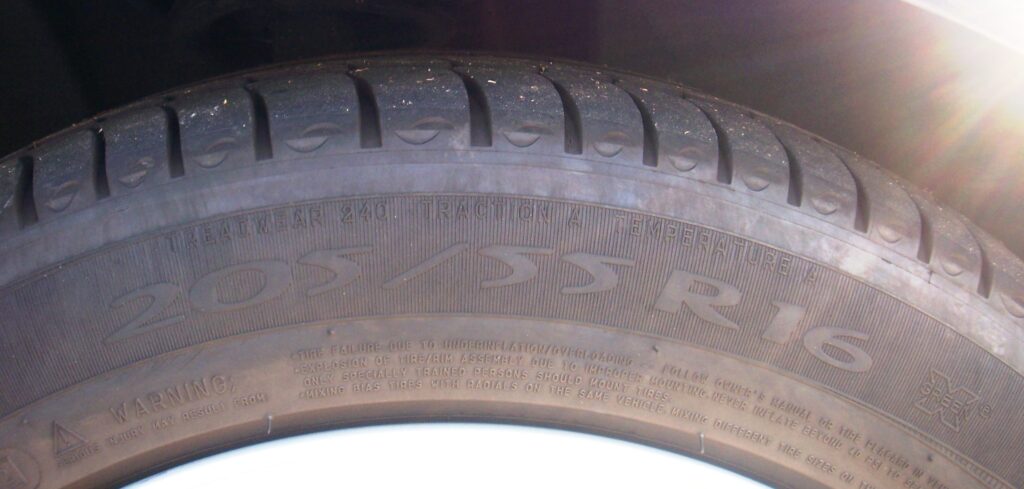
The easiest place to begin is the large size code on the sidewall. It often looks something like P205/55R16 or 225/60R17. This code tells you the tire type, width, sidewall ratio, construction style, and wheel diameter. It is the marking most people need when replacing tires or checking whether two tires match.
The first letter may identify the tire type. A P often means passenger vehicle. LT usually points to light truck use. Some tires may have no starting letter at all. After that, the first number is the tire width in millimeters. In a 205/55R16 tire, the 205 means the tire is about 205 millimeters wide from sidewall to sidewall.
The number after the slash is the aspect ratio. In 205/55R16, the 55 means the sidewall height is 55 percent of the tire width. A lower number usually means a shorter sidewall. A higher number usually means a taller sidewall. This affects the tire’s shape, comfort, and how it fits the vehicle.
The R means radial construction, which is common on modern passenger vehicles. The final number is the wheel diameter in inches. In 205/55R16, the tire is made for a 16-inch wheel. That last number is not optional: a tire for a 16-inch wheel will not fit a 17-inch wheel.
Read the code in small pieces instead of one long string
A tire size becomes less intimidating when each part has a job. The code is not one mysterious number; it is a compact description. Read it from left to right and pause after each section. If you try to understand the whole line at once, it is easy to mix up width, sidewall height, and rim diameter.
For a code like P205/55R16, the basic pieces are:
- P: passenger tire type, when the letter appears.
- 205: tire width in millimeters.
- 55: sidewall height as a percentage of width.
- R: radial tire construction.
- 16: wheel diameter in inches.
Replacement tires should generally match the size listed for the vehicle unless a tire professional confirms a suitable alternative. A tire can be close in appearance and still be wrong for the wheel, suspension clearance, speedometer accuracy, or load needs. Size is not just a visual detail.
Read the tire size as a set of labels, not as a single number to decode from memory.
This method also helps when you compare two tires beside each other. If the width, ratio, construction letter, or wheel diameter is different, pause and confirm the match before assuming the tire is close enough.
Check the load index and speed rating
After the size code, you may see a smaller number and letter, such as 91V, 94H, or 102T. The number is the load index, and the letter is the speed rating. Together, they describe how much weight the tire is rated to carry and the maximum speed category assigned under test conditions.
The load index is not the weight itself. It is a code that corresponds to a weight rating. A higher load index generally means the tire can carry more weight, but the right number depends on the vehicle. Replacing a tire with a lower load index than recommended can be unsafe, especially when the car is loaded with passengers, cargo, or towing equipment.
The speed rating is also a code. Common letters include T, H, V, and W, though there are others. It does not mean the driver should travel at that speed. It means the tire meets a tested speed category when properly inflated and used within its limits. For everyday driving, the rating still matters because it is part of the tire specification chosen for the car.
The safest replacement tire is not just the same size; it also needs the right load and speed rating for the vehicle.
If you are unsure, compare the sidewall with the sticker inside the driver’s door area or the owner’s manual. Those vehicle references usually show the tire size and pressure information the manufacturer expects for normal use.
Find the DOT code and tire age
The DOT code is one of the most useful markings for checking tire age. It usually begins with DOT and includes letters and numbers that identify manufacturing information. The last four digits are the part beginners usually need. They show the week and year the tire was made.
For example, a code ending in 2419 means the tire was made in the 24th week of 2019. A code ending in 0723 means the tire was made in the 7th week of 2023. This date code matters because tires age even when tread depth looks acceptable. Heat, sunlight, storage, and time can all affect rubber condition.
The DOT date code may appear on only one side of the tire. If you do not see the final four digits on the outer sidewall, they may be facing inward. You can still inspect for obvious cracking, bulges, cuts, and uneven wear from the visible side, but the full date code may require a closer look or help from a shop.
Age is not the only reason to replace a tire, and tread depth is not the only safety clue. A tire can be old with decent tread, or young with damage. Sidewall reading gives you one more piece of the decision instead of relying on appearance alone.
Notice pressure markings without using them as the daily target
Many tire sidewalls include a maximum pressure marking. Beginners often mistake this for the normal tire pressure to use every day. The maximum pressure printed on the tire is a tire limit, not necessarily the recommended pressure for your vehicle. The daily target usually comes from the vehicle sticker or owner’s manual.
The recommended pressure is chosen for the vehicle’s weight, handling, ride, and tire setup. It is commonly found on a sticker in the driver’s door jamb, glove box area, fuel door, or manual, depending on the vehicle. Use that number for normal cold-tire pressure checks unless a qualified professional gives a specific reason to do otherwise.
Sidewall pressure information is still useful because it reminds you that tires have limits. It also helps explain why guessing is not a good habit. Overinflation and underinflation can affect tire wear, braking, handling, ride comfort, and fuel use. A simple pressure gauge is often more useful than trying to judge a tire by sight.
When checking tire pressure:
- Use the vehicle’s recommended cold pressure, not the sidewall maximum.
- Check pressure when the tires have not been driven far recently.
- Check all four tires and the spare if the vehicle has one.
- Look for repeated pressure loss in the same tire.
- Do not ignore sidewall cracks, cuts, bulges, or bubbles.
Use a simple routine when reading any tire sidewall
A routine keeps the sidewall from turning into a guessing game. You can use the same order whether you are checking your own car, shopping for replacement tires, or comparing a spare tire. Work from the big size code to the smaller safety details, then confirm everything against the vehicle information.
Use this sequence:
- Find the largest size code, such as 205/55R16.
- Identify the width, aspect ratio, construction letter, and wheel diameter.
- Look for the load index and speed rating after the size.
- Find the DOT code and read the final four date digits.
- Check for pressure markings, but use the vehicle sticker for daily pressure.
- Inspect the sidewall for cracks, cuts, bulges, bubbles, or uneven damage.
- Compare the tire information with the driver’s door sticker or manual.
This routine is also helpful when something feels off. If one tire has a different size, lower load rating, older date code, or visible sidewall damage, that is worth checking further. Matching tires are especially important on many vehicles because different sizes or wear levels can affect handling and drivetrain behavior.
Reading a tire sidewall is not about becoming a tire engineer. It is about knowing where to look before buying, replacing, inflating, or questioning a tire. Once the size code, load index, speed rating, date code, and pressure note make sense, the sidewall becomes a useful owner tool instead of a confusing ring of rubber text.