How to Wash a Car at Home for Beginners
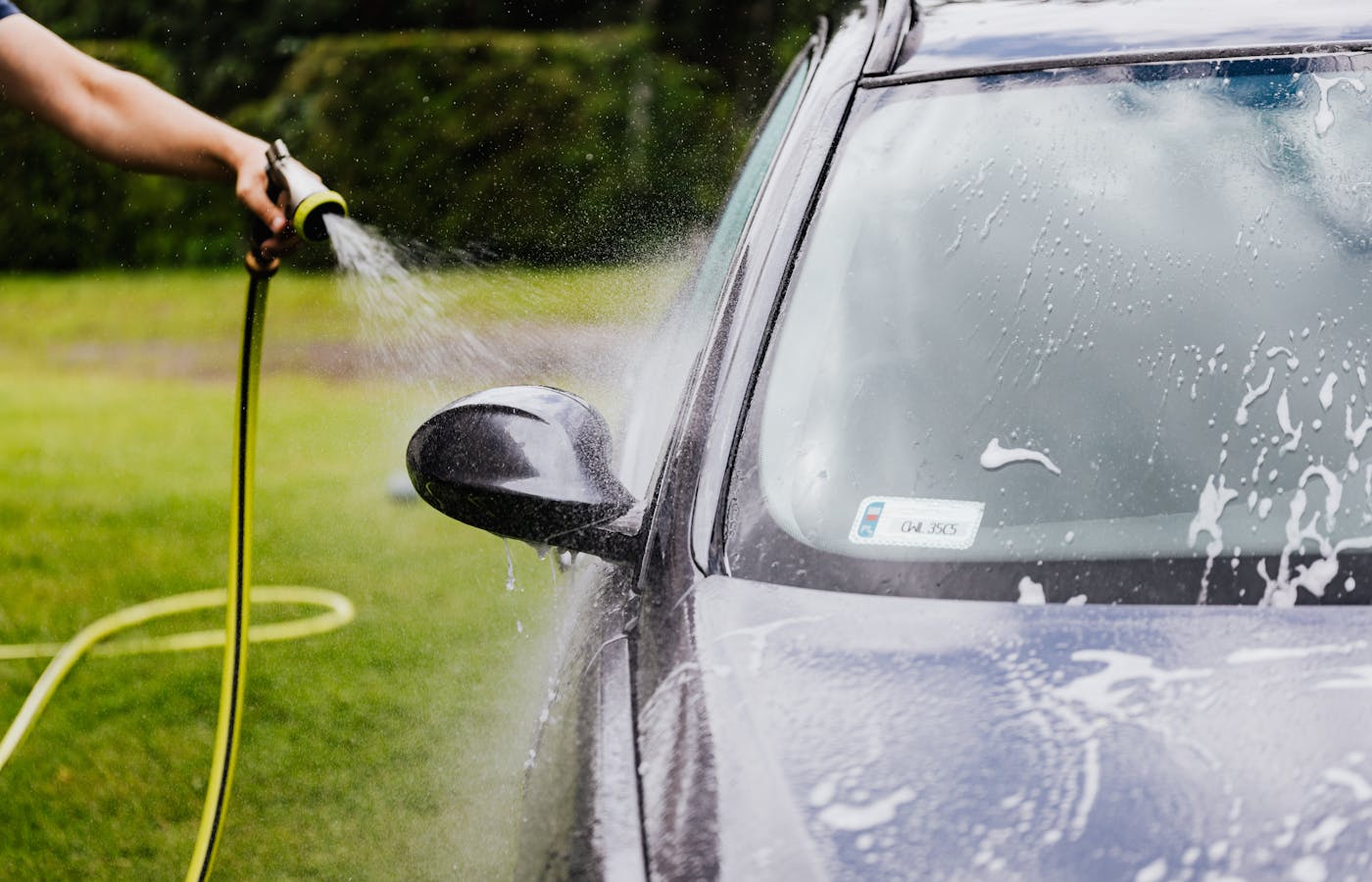
Washing a car at home sounds simple until the soap dries too fast, the towel leaves marks, or the wheels stay dirty after the body looks clean. For a beginner, the best routine is not complicated. It is a calm order of steps that keeps grit away from the paint and gives each surface enough attention.
Learning how to wash a car at home for beginners starts with setup. A little shade, the right soap, a clean mitt, and a drying towel do more for the finish than rushing around with whatever sponge is closest. The car does not need a showroom treatment every time, but it does need a method that avoids dragging dirt across the paint.
The safest beginner rule is to rinse first, wash gently, and dry before water spots settle in. That one sentence keeps most home car wash mistakes from taking over.
Choose the right place before water touches the car
Location changes the whole wash. Direct sun can dry soap and water before you finish a panel, leaving streaks or spots that are harder to remove. A shaded driveway, carport, or cooler part of the day gives you more time to work calmly. If shade is not possible, wash smaller sections and rinse more often.
Check where the water will run, too. Avoid washing near loose dirt, gravel, or muddy ground because splashback can put grit right back onto the car. If local rules limit driveway washing or runoff, use a self-serve wash bay instead. The point is not to force a home wash when the setting makes the job messy or restricted.
Before starting, close windows, fold in mirrors if needed, remove loose items around the car, and make sure the paint is cool to the touch. This small setup step makes the rest of the wash smoother and less rushed.
Gather simple supplies that will not scratch paint
A beginner car wash does not require a shelf full of products. It does require supplies that are clean and meant for paint. Dish soap is too harsh for regular car washing because it can strip protective waxes. Use car wash soap, a soft mitt or sponge, a separate wheel brush if available, and microfiber towels for drying.
Keep the dirty work separated from the paint work. Wheels, lower panels, and tires usually hold more grit than the roof, hood, or windows. If the same mitt touches everything, the dirt from the dirtiest surfaces can travel to the paint. That is where many swirl marks begin.
- Use car wash soap instead of dish soap for routine washing.
- Keep one mitt or sponge for painted panels.
- Use a separate brush, mitt, or towel for wheels and tires.
- Rinse buckets, mitts, and towels before they touch the car.
- Choose soft microfiber towels for drying, not rough household towels.
If a towel feels scratchy in your hand, it does not belong on the paint.
Rinse from top to bottom before using soap
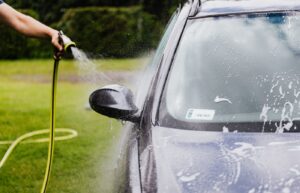
The first rinse removes loose dust, pollen, and road grit before you start touching the paint. Begin at the roof and work downward so dirt flows off the car instead of being pushed around. Spend extra time on lower doors, rocker panels, bumpers, and the rear of the vehicle, because those areas collect more road film.
A strong blast of water is not always necessary. Use enough pressure to move loose dirt, but do not aim high pressure directly into delicate trim, sensors, seals, or damaged paint. The goal is to loosen and carry away debris, not force water into places it should not go.
After rinsing, look for spots that still hold visible grit. If you see sandy buildup near wheel arches or lower panels, rinse again before washing by hand. Touching that grit too early can turn a simple wash into a scratch risk.
Wash small sections with light pressure
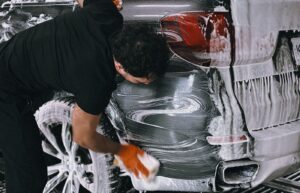
Soap gives the mitt lubrication, but pressure still matters. Work in small sections, starting with cleaner upper panels and moving toward dirtier lower areas. Use straight, gentle passes instead of aggressive circles. Rinse the mitt often so it does not keep carrying grit across the surface.
Do not let soap dry on the car. If a panel begins to dry before you finish, rinse it and come back to that area. Beginners sometimes try to soap the whole vehicle at once, but that makes the job harder in warm weather. A section-by-section routine is slower for a few minutes and cleaner in the final result.

Use this basic wash order when you are learning:
- Rinse the whole car from roof to lower panels.
- Wash the roof, glass, hood, and trunk first.
- Move to upper doors and fenders with a rinsed mitt.
- Wash lower panels last because they collect more road grit.
- Clean wheels and tires with separate supplies.
- Rinse each section before soap has time to dry.
This order is not about perfection. It simply keeps the dirtiest parts from contaminating the cleaner ones. That is the same reason a beginner car-cleaning checklist starts with broad cleanup before smaller details.
Clean wheels and tires without spreading brake dust
Wheels often need their own pass because brake dust, road grime, and tire residue are tougher than normal dust on paint. If you clean wheels first, rinse carefully before touching painted panels. If you clean them after the body, keep the wheel tools separate so that dark residue does not transfer to the car’s finish.
Use a wheel-safe cleaner only if you know it matches your wheel type. For a basic beginner wash, car soap, water, and a dedicated brush may be enough. Reach around lug nuts, spokes, and the lower part of the wheel where grime collects. Rinse thoroughly so cleaner or soap does not dry in corners.
- Use separate wheel towels, brushes, or mitts.
- Do not wipe painted panels with a towel used on wheels.
- Rinse wheel cleaner before it dries.
- Clean tire sidewalls if they look brown or dusty.
- Check behind spokes for leftover soap or brake dust.
Wheels do not need to be perfect every time, but they should not be the reason dirty water splashes back onto clean panels.
Dry the car and check the details before finishing
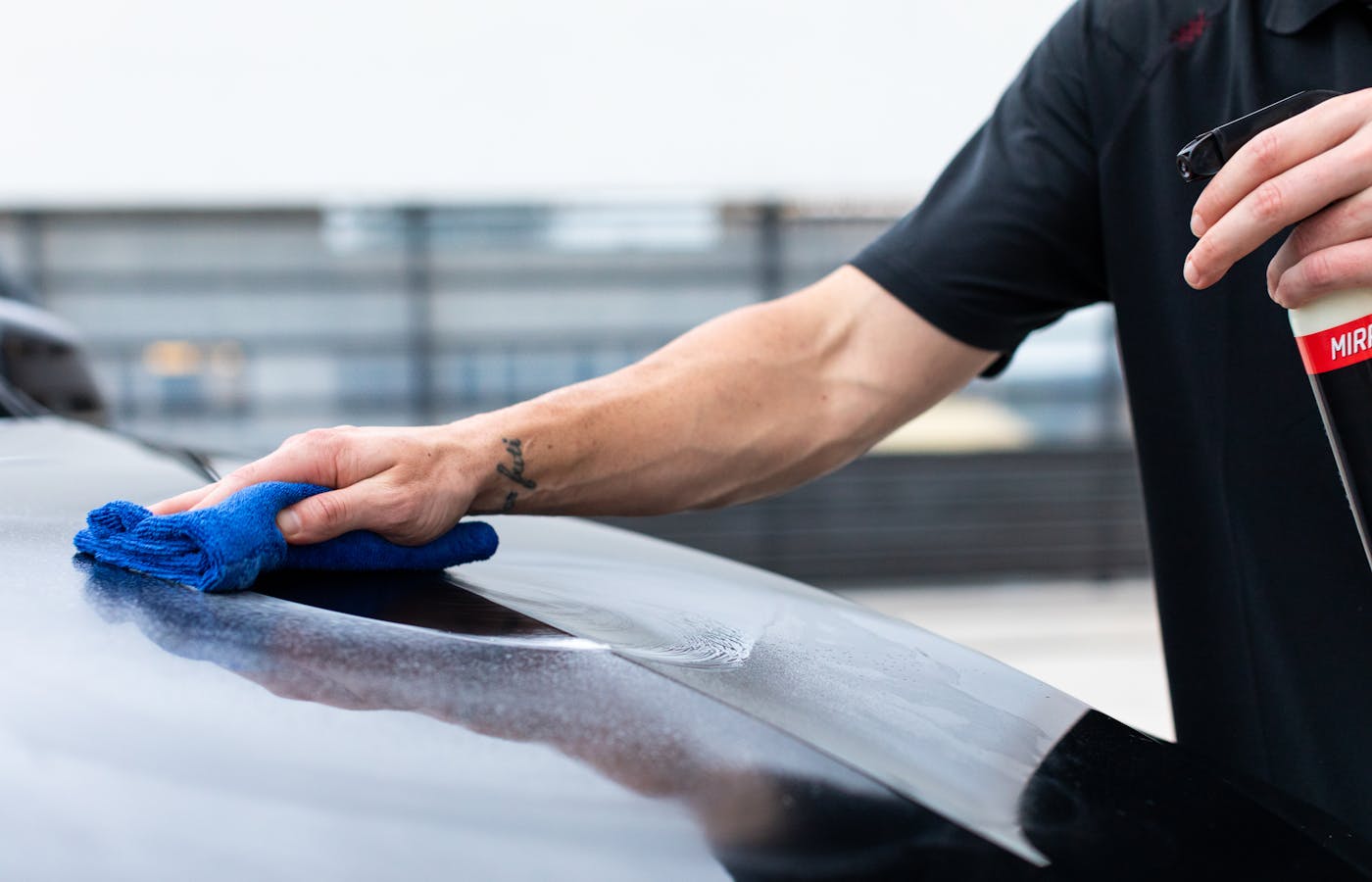
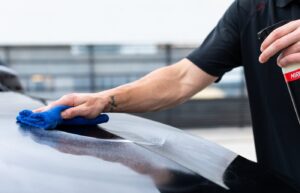
Drying is where a decent wash can start looking polished. Letting water air-dry often leaves spots, especially in hard-water areas. Use a clean microfiber drying towel and work from top to bottom. Lay the towel gently, pull it across the panel, and wring or switch towels as it becomes wet.
Open doors, trunk edges, and fuel-door areas only if you can do it safely and without dripping dirty water back over clean panels. Wipe obvious water from mirror edges, door handles, emblems, and glass seams. These little areas often drip after you think the car is finished.
Step back and look along the sides in natural light. Check for soap left near trim, water sitting around mirrors, dirty spots on lower panels, and streaks on glass. Washing a car at home for beginners becomes easier when the final check is part of the routine, not an afterthought. With a good setup, clean supplies, gentle washing, and careful drying, the car can look noticeably better without turning the afternoon into a major project. The next wash will feel faster because the order is already familiar.