How to Check Tire Pressure the Right Way
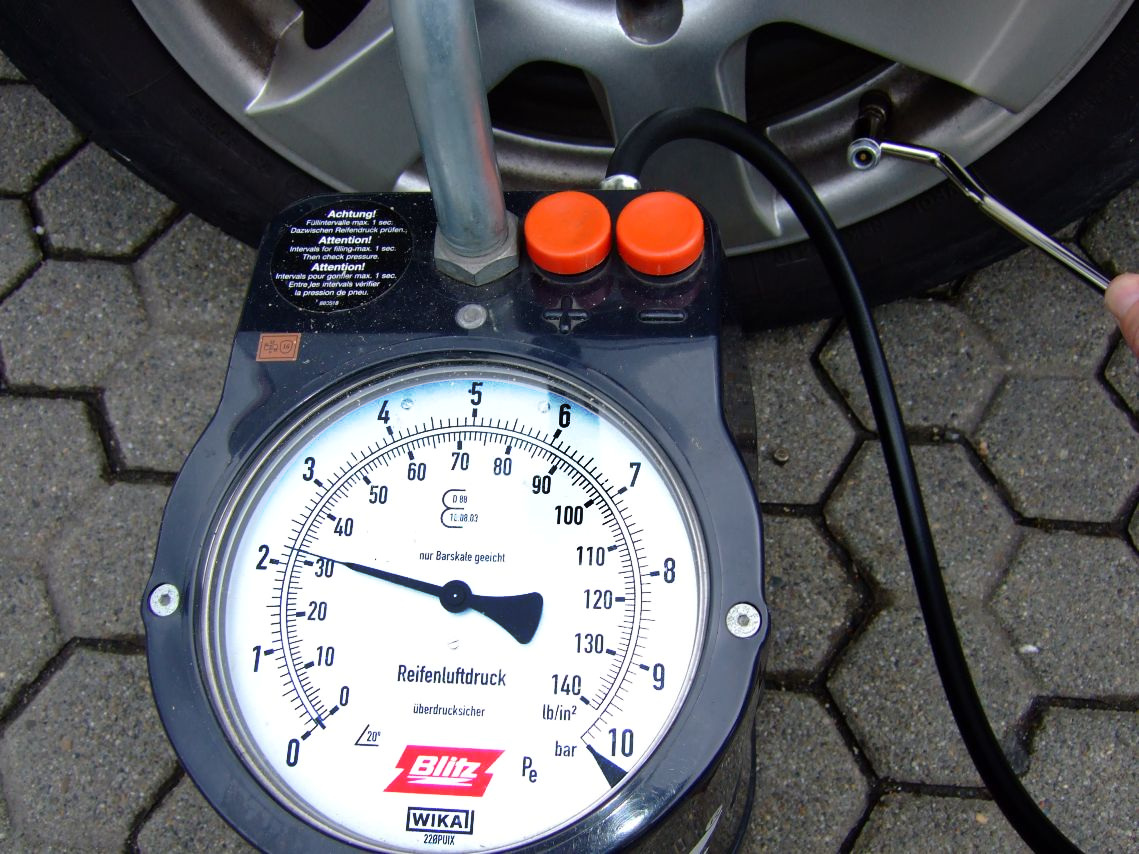
Tire pressure is one of the simplest car checks, but it is easy to do at the wrong time or compare against the wrong number. The number printed on the tire sidewall is not the daily target. The number you need is usually on the driver door sticker or in the owner’s manual.
A good pressure check takes only a few minutes. It helps tires wear evenly, supports fuel economy, and gives the car the contact with the road that the manufacturer expected.
The habit is especially useful before long drives and after big temperature swings. Air pressure changes with weather, and a tire that looked fine last month may be low after a cold morning or a slow leak. A gauge removes the guesswork.
It is also a confidence skill. Once you know how to get a reliable reading, air pumps and warning lights feel less mysterious during normal errands and before longer trips too, safely done.
Check pressure when the tires are cold
Keep the gauge somewhere you can find it quickly. A tool buried under cargo will not become a habit. The glove box, console, or a small pouch with other car basics makes the check much easier to repeat.
Check the gauge occasionally against another reliable gauge if readings seem strange. Cheap gauges can still be useful, but any tool can be dropped, bent, or worn out.
Cold tires give the most useful reading. That usually means the car has been parked for several hours or driven only a short distance at low speed. As tires roll, heat builds and pressure rises. If you check right after a highway drive, the number may be higher than the real cold pressure and you might let out air that the tire actually needs.
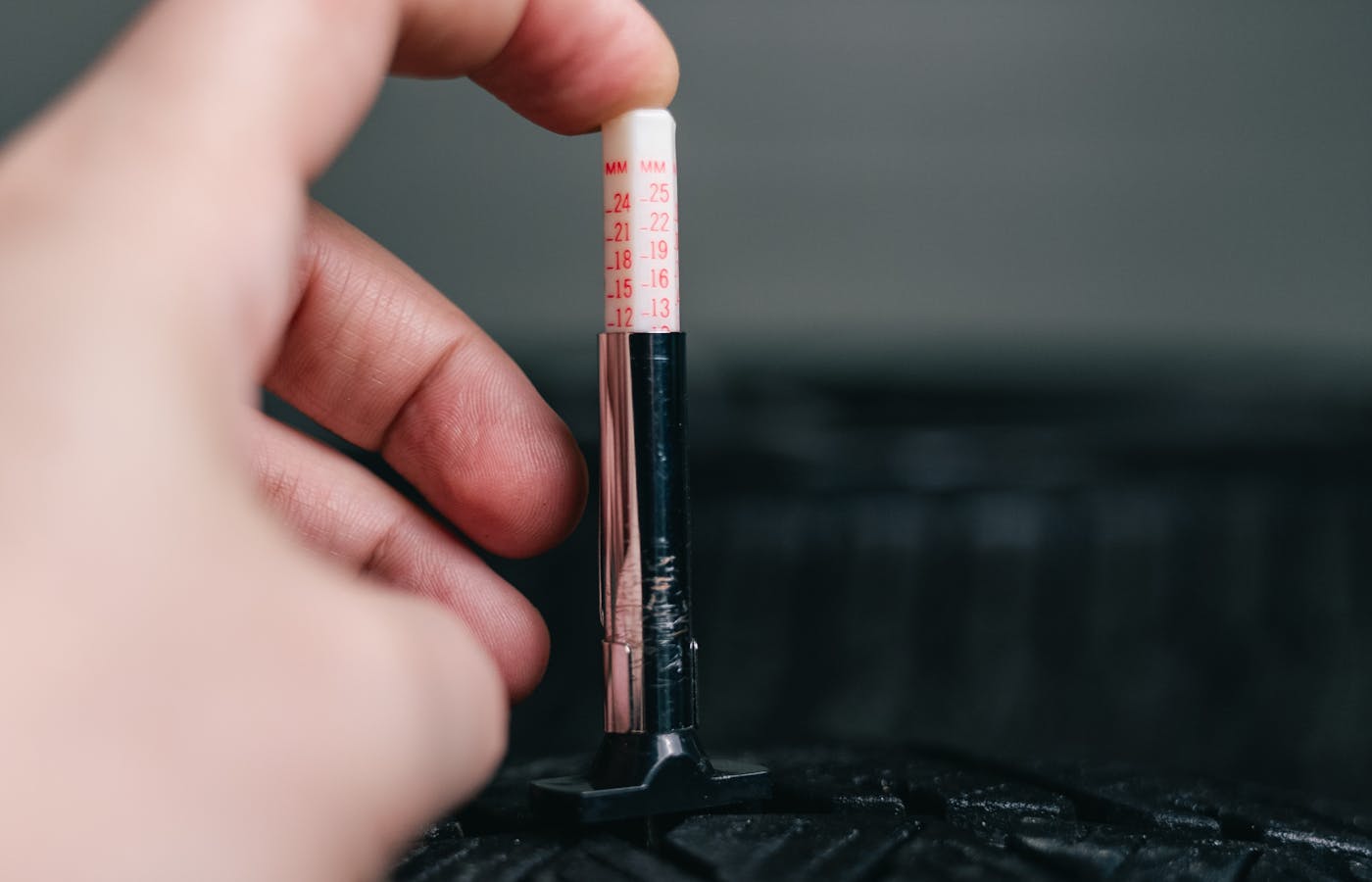
Morning is often the easiest time. Keep a small gauge in the glove box or door pocket, check before errands, and write down any tire that looks low. Consistency matters more than fancy equipment. A basic digital or pencil gauge can work if it is not damaged and you use it carefully.
| Where to look | What it tells you |
|---|---|
| Driver door sticker | Recommended cold PSI |
| Owner’s manual | Pressure notes and tire sizes |
| Tire sidewall | Maximum tire information, not the usual target |
| TPMS light | Warning, not a full pressure routine |
Find the door sticker before adding air
If the sticker lists different numbers for front and rear tires, follow those positions carefully. Do not assume all four tires need the same PSI. Some vehicles are designed with different pressure targets by axle.
Some cars list higher pressure for heavy loads or sustained highway driving. Follow the manual for those situations rather than inventing a number based on tire appearance, because the tire can look normal while the reading is still wrong.
Open the driver door and look for the tire information placard. It may be on the door jamb, door edge, or nearby pillar. The sticker lists recommended cold pressure, often with separate numbers for front and rear tires. Some vehicles also list spare tire pressure, which can be much higher than the regular tires.
Do not inflate every tire to the sidewall maximum unless the manual specifically tells you to for a special condition. The sidewall number describes the tire’s limit, not the vehicle’s normal setting. Using the door sticker keeps the pressure matched to the car’s suspension, load expectations, and tire size.
Press the gauge firmly on the valve stem
Valve caps are small, but losing them invites dirt into the valve area. Put the cap in your pocket or on the tire tread while measuring so it does not roll under the car or disappear at the air pump.
If the valve stem is cracked, stiff, or leaking, do not ignore it. The tire may be fine while the valve is the real problem, and that still needs repair.
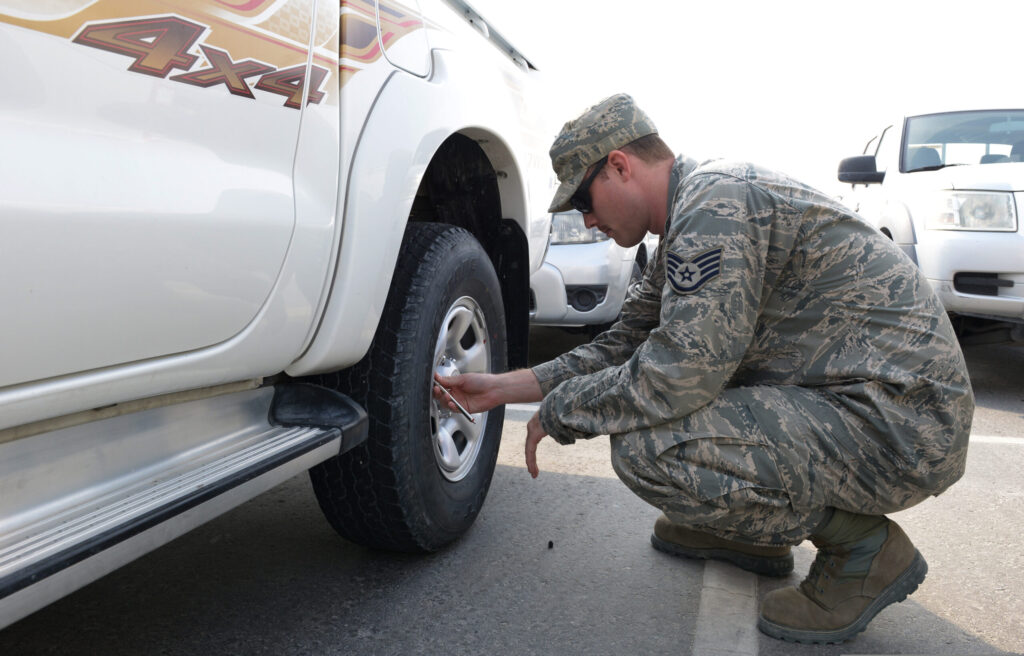
Remove the valve cap and put it somewhere safe. Press the gauge straight onto the valve stem. If you hear a long hiss, the seal is not good; reposition and press again. Read the number, then check the tire a second time if the first reading seemed odd. Replace the valve cap when you are done because it helps keep dirt away from the valve.
Check all four tires, not just the one that looks low. Tires can lose air slowly, and visual checks are unreliable. A tire can be underinflated before it looks flat. If your vehicle has a spare, check that too on a regular schedule. Many drivers discover a flat spare only when they actually need it, which is why a broader fluid-check routine helps keep small checks from being forgotten.
- Check before long trips.
- Check after big temperature changes.
- Check when the TPMS light appears.
- Check the spare every few months.
Add or release air in small steps
At a gas station, check the pump hose before using it. A cracked hose or damaged chuck can make inflation frustrating. If the air station behaves oddly, stop and recheck with your own gauge before driving away.
Air pumps with automatic settings can still be off. Set the target if available, inflate, then confirm with your own gauge. Your final reading is the one that matters.
If the tire is low, add air a little at a time and recheck. Gas station air pumps can add pressure quickly, so do not hold the hose on too long without measuring. If pressure is too high when the tire is cold, press the valve briefly to release air, then check again. Work toward the recommended PSI rather than trying to be perfect on the first attempt.
Temperature changes affect pressure. A cold snap can make the number drop, and hot weather can raise readings. That is normal, but large or repeated losses from one tire may signal a leak, nail, valve issue, or wheel problem. If one tire keeps needing air, have it inspected instead of simply refilling forever.
Do not ignore a tire that loses pressure repeatedly. Slow leaks can become unsafe at the worst time.
Treat TPMS as a warning, not the whole routine
After adjustment, take one final reading on each tire. That last pass catches the tire you overfilled, the cap you forgot, or the reading that changed because the gauge was not seated cleanly.
Pair pressure checks with a quick tread glance. You are already beside each wheel, so a thirty-second look for nails, cuts, or uneven wear adds useful safety information.
The tire pressure monitoring system is helpful, but it should not replace a manual check. Some systems warn only after pressure has dropped noticeably. Some show individual tire numbers, while others only turn on a light. Either way, a gauge gives you the actual reading and lets you correct all tires evenly.
After inflating, the TPMS light may need a short drive or a reset procedure depending on the car. Check the manual if the light stays on after pressures are corrected. If the light flashes or returns quickly, treat that as a reason to inspect further.
- Check tires cold when possible.
- Use the PSI on the driver door sticker, not the sidewall maximum.
- Press the gauge straight onto the tire valve and recheck odd readings.
- Add or release air in small steps, then replace every valve cap.
The right tire pressure is the cold PSI recommended for your vehicle, checked with a gauge and adjusted calmly. For beginners, that is one of the easiest maintenance wins to repeat.
A gauge reading is more trustworthy than a tire that only looks fine.