Car Maintenance Checklist for Beginners

A beginner car maintenance checklist should not make you feel like you need to become a mechanic overnight. The useful version is simpler: know what to check, when to stop and ask for help, and which small habits prevent expensive surprises. Most beginners need a repeatable inspection rhythm more than a technical lecture.
I would build the habit around visible checks first. Tires, fluids, lights, wipers, warning sounds, and records tell you a lot before a car leaves you stranded. The owner’s manual still matters, especially for service intervals and fluid specifications, but a monthly walk-around gives you a practical starting point.
Check tires before they become an emergency
Tires are one of the easiest maintenance items to ignore because they look fine until they are not. Check tire pressure when the tires are cold, using the pressure listed on the driver’s door sticker or owner’s manual, not the number printed on the tire sidewall. The sidewall number is usually a maximum, not the target for normal driving.
Look at tread depth, uneven wear, bulges, cuts, embedded nails, and sidewall cracking. Uneven wear can point to alignment, suspension, or inflation problems. A tire that keeps losing air deserves attention even if it still looks round. If your car has a spare tire, check that too; a flat spare is a bad discovery on the shoulder of the road.
Keep the pressure gauge where you will actually use it, not buried under cargo. A glove box, center console, or small trunk pouch works. If you rely only on the gas station gauge, you may skip the check when the station is busy, the weather is bad, or the hose looks broken.
Tire checks are safety checks, not cosmetic checks. Underinflated tires can affect handling, braking, fuel economy, and tire life. Overinflated tires can reduce contact with the road and wear unevenly. If pressure changes dramatically with weather, recheck after temperature swings and before longer trips.
| Check | Beginner action |
|---|---|
| Tire pressure | Use the door-sticker number when tires are cold |
| Tread | Look for low or uneven wear |
| Sidewalls | Check for cracks, cuts, or bulges |
| Spare tire | Confirm it is present and usable |
Learn the fluid checks you can safely observe
Fluid checks should be calm and careful. With the car parked on level ground, engine off unless the manual says otherwise, and the engine cool enough for the task, identify the dipsticks and reservoirs you are allowed to inspect. Engine oil, coolant, brake fluid, windshield washer fluid, and sometimes power steering or transmission fluid may be visible depending on the vehicle. A beginner maintenance routine gives these checks a repeatable place instead of leaving them to memory.
Do not open a hot radiator cap. Do not pour random fluid into a reservoir because the cap looks similar. Brake fluid, coolant, oil, and washer fluid are not interchangeable, and the wrong fluid can cause real damage. If a reservoir is low and you do not know why, topping it off may not solve the underlying leak or wear issue.
Oil should be checked according to the owner’s manual, using the dipstick or the vehicle’s electronic system if equipped. Washer fluid is easy to refill and worth keeping ahead of bad weather. Coolant level can often be checked at the translucent reservoir. Brake fluid dropping can be a serious sign, so treat that as a reason to inspect further or contact a professional.
Battery condition is another beginner-friendly observation, even if you do not test it yourself. Look for corrosion around terminals, a loose hold-down, slow cranking, dim lights at startup, or a battery that is past its expected age. If the car hesitates before starting, write down when it happens instead of waiting for a no-start morning. A maintenance checklist starts with the same visible levels covered in basic car fluid checks.

Walk around the car and test lights, wipers, and visibility
A monthly walk-around catches simple problems that create risk. Turn on headlights, high beams, hazard lights, turn signals, brake lights, reverse lights, and license plate lights. Ask someone to stand outside, or use a reflection in a window or garage door. A burned-out brake light is easy to miss from the driver’s seat.
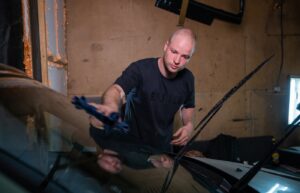
Check wiper blades for streaking, skipping, cracked rubber, or noise. If the windshield smears in rain, the blades may need replacement or the glass may need cleaning. Fill washer fluid before it runs dry. Visibility is maintenance, especially during rain, winter spray, dusty roads, or night driving.
Look at mirrors, windshield chips, loose trim, low-hanging parts, and anything under the car that was not there before. A few drops of water from air conditioning may be normal. Oily, green, orange, red, or strong-smelling puddles deserve more attention. Beginners do not need to diagnose every leak, but they do need to notice one.
Inside the car, clean the windshield from the cabin side as well. Interior haze can make night glare worse, especially in rain. Make sure defrosters blow air, vents are not blocked, and the dashboard is not covered with objects that can slide during a sudden stop.
Use mileage, time, and symptoms together
Maintenance intervals are not only about mileage. Some services are based on time, driving conditions, or the way the car is used. Short trips, heat, cold, towing, dusty roads, heavy traffic, and long storage can change what a vehicle needs. The owner’s manual is the anchor because it was written for that specific model.
Keep records for oil changes, tire rotations, filters, brake work, battery replacement, inspections, and major repairs. A simple note with date, mileage, service, and shop name is enough. Records help you avoid paying for the same service too soon, and they help a mechanic understand the car faster when something changes.
- Track oil change date and mileage.
- Record tire rotations and pressure issues.
- Write down warning lights and when they appeared.
- Save repair invoices in one folder or app.
Symptoms matter too. A new vibration, squeal, burning smell, hard start, soft brake pedal, pulling to one side, or temperature gauge movement is not just “car personality.” Note when it happens: cold start, braking, turning, highway speed, rain, hills, or after fueling.
Before a road trip, shorten the checklist but make it sharper: tire pressure, oil level if your car allows an easy check, coolant reservoir, washer fluid, lights, wipers, registration, insurance, and an emergency kit. Add phone charging, water, and the roadside assistance number. A trip check is not a full service; it is a last chance to catch obvious trouble.
Know which beginner jobs to do and which to hand off
Some beginner maintenance is reasonable: checking tire pressure, topping washer fluid, replacing wiper blades, changing cabin air filters on some cars, cleaning battery corrosion if you know the safe method, and keeping records. Other tasks can become expensive or dangerous if guessed through: brake work, coolant issues, electrical faults, overheating, fuel smells, and anything involving lifting the vehicle without proper equipment.
Use a simple boundary: if a mistake could affect braking, steering, engine temperature, fuel, airbags, or safe lifting, get qualified help. Learning is good; guessing on a safety system is not. Watching a professional, reading the manual, and starting with low-risk checks is a better path than forcing confidence too early.
If a shop recommends a repair you do not understand, ask what happens if you wait, what symptom supports the diagnosis, and whether the part is a safety item. A clear answer helps you prioritize. A vague answer is a reason to slow down, read the estimate, and consider a second opinion for expensive work.
- Check tire pressure and look for uneven wear.
- Confirm washer fluid, visible oil level, lights, and wipers.
- Look under the parked car for new leaks.
- Write down mileage, date, and anything that changed.
- Book help when a warning light, smell, leak, or noise repeats.
A beginner checklist works when it becomes routine. Once a month, check tires, fluids you can safely observe, lights, wipers, leaks, and records. Before a long drive, do the same with more attention. The car does not need perfect attention every day, but it does need consistent attention before small clues turn into roadside problems.